Cooking Math: 5 Delicious Kitchen Math Activities for Kids
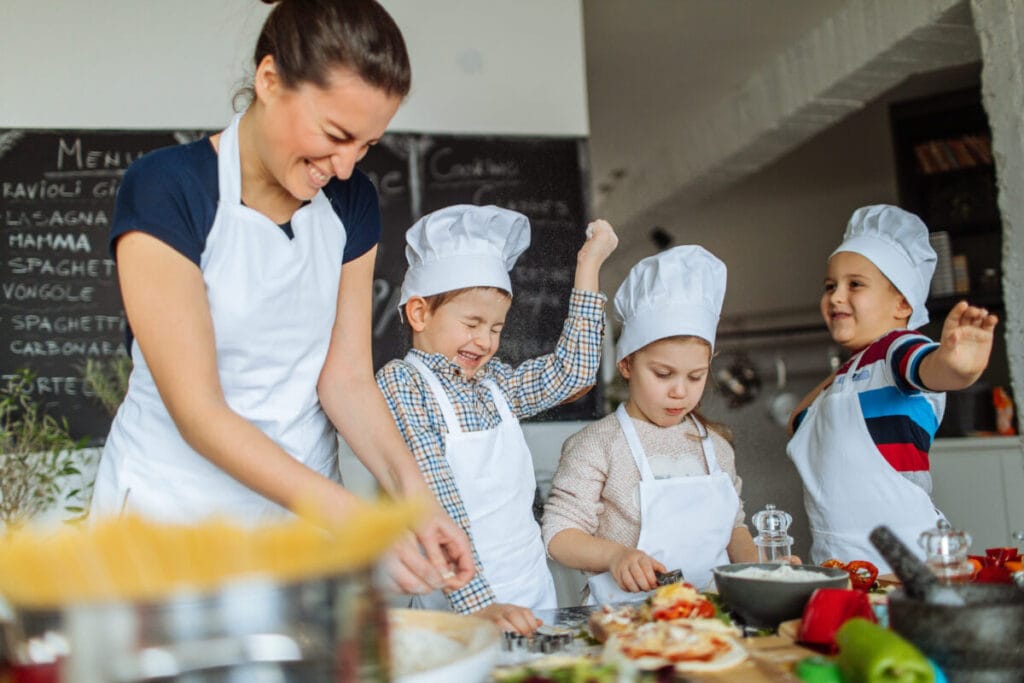
Let’s be honest: worksheets can be boring. But pizza? Pizza is never boring.
For many students, math concepts like fractions and ratios are abstract and difficult to visualize. But as soon as you step into the kitchen, those abstract numbers turn into tangible, edible realities.
Cooking math is one of the most effective ways to teach STEM concepts because it provides immediate, sensory feedback. If you miscalculate a fraction on a worksheet, you get a red mark. If you miscalculate a fraction in a cake recipe, the cake might not rise!
Whether you are a homeschooling parent or a teacher looking for hands-on curriculum, here are five tasty ways to master kitchen math activities and turn dinner prep into a learning laboratory.
1. Teaching Fractions with Pizza (and Pie)
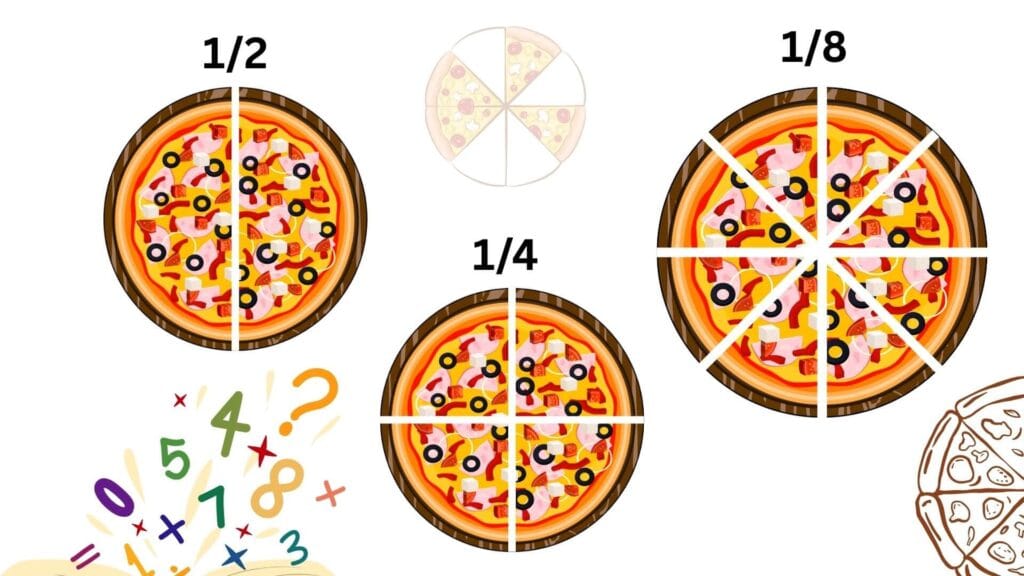
One of the classic stumbling blocks for students is understanding fractions. Why is 1/4 bigger than 1/8?
Baking with fractions solves this instantly. The most visual way to demonstrate this is the “Pizza Method.”
- The Activity: Make a homemade pizza or a round pie.
- The Math: Ask your child to cut the pizza into equal halves, then quarters, then eighths.
- The Challenge: Ask questions like, “If I eat two slices of an eight-slice pizza, is that the same as eating one slice of a four-slice pizza?” (Visualizing 2/8 = 1/4).
Parent Tip: For older kids, create “Fraction Pizzas.” Put pepperoni on 1/3 of the pizza and mushrooms on 1/6. Ask them to calculate how much of the pizza has no toppings.
2. Volume vs. Weight Measurements
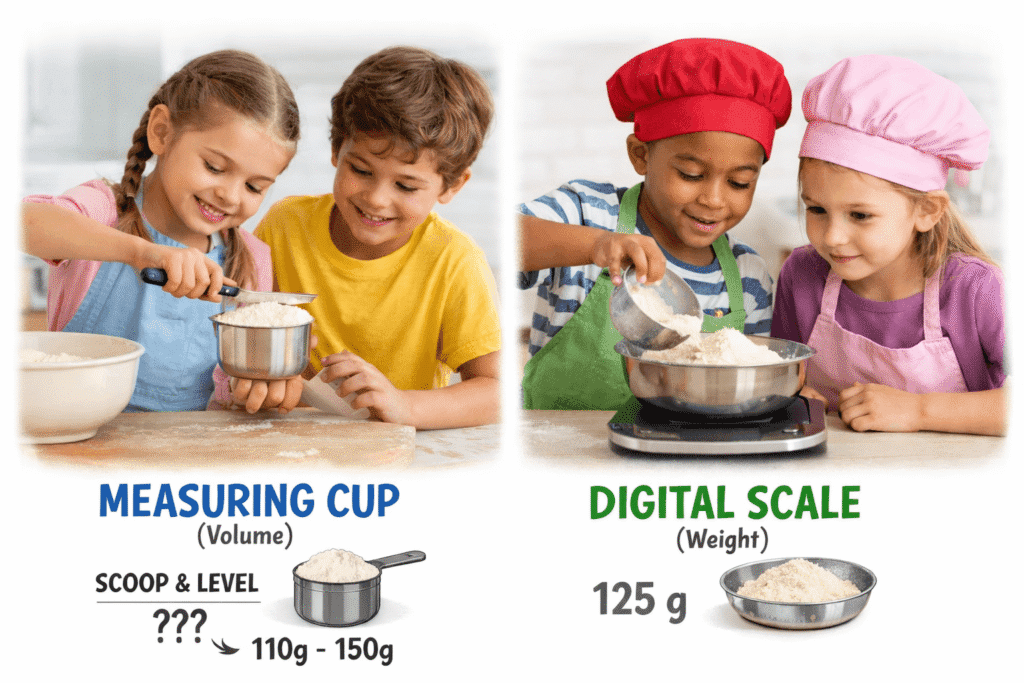
In American kitchens, we love our measuring cups. But did you know that professional chemists and bakers almost never use cups? They use scales. This is the perfect opportunity to introduce the scientific method and precision found in our STEM labs.
Volume vs. Weight measurements can vary drastically.
- The Experiment: Ask your child to scoop one cup of flour and weigh it. Then, ask them to sift the flour and measure one cup again.
- The Result: They will likely find the sifted flour weighs less, even though the volume (1 cup) is the same.
- The Lesson: Discuss density. This explains why serious scientists and bakers prefer the metric system in the kitchen (grams and liters) over the imperial system—it offers far more precision.
3. Converting Recipes: The Art of Doubling and Halving
One of the most practical life skills is converting recipes. This is essentially a lesson in multiplication and division.
- The Scenario: “We have a cookie recipe that makes 12 cookies, but we have 24 guests coming. What do we do?”
- The Math: Have your child go through the ingredient list and multiply every number by 2.
- The Challenge: This gets tricky with fractions! What is 3/4 of a cup doubled? (6/4 or 1 and 1/2 cups). What is half of 1/3 of a cup?
- The Tool: Have them write out the “New Recipe” card before they start cooking to check their work.
4. The Geometry of Slicing Vegetables
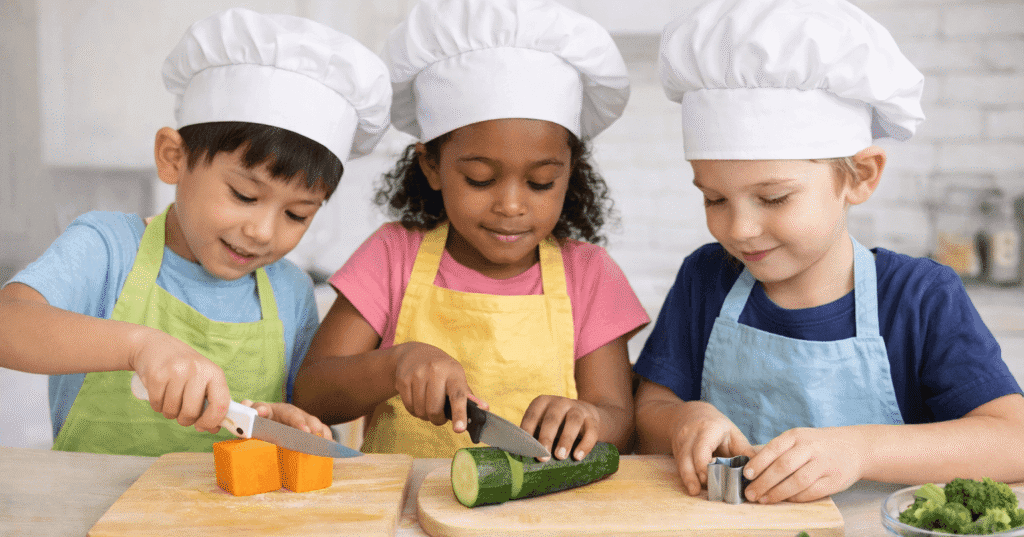
Geometry isn’t just about drawing shapes on graph paper; it’s about how shapes interact in the real world. The geometry of slicing vegetables can change how food cooks!
- Surface Area: Cut a potato into large chunks and another into thin julienne strips. Roast them at the same temperature for the same time. Which one burns?
- The Lesson: The thin strips have more surface area relative to their volume, meaning they cook (and burn) faster.
- Shape Identification: Cut carrots into “rounds” (circles) vs. “bias cuts” (ovals). Ask your child to identify the properties of the shapes.
5. Advanced STEM: Baker’s Percentages Explained
For the middle schooler or aspiring chef, you can introduce the “Secret Code” of professional bakers: Baker’s Percentages.
In professional baking, ingredients aren’t just measured; they are calculated as a ratio to the flour.
- The Formula: The flour is always 100%.
- The Math: If a bread recipe calls for 1000g of flour and 700g of water, the hydration is 70%.
- Why it matters: Once a student understands Baker’s percentages explained, they can scale a recipe to make one loaf or one thousand loaves without ever needing a recipe book—they just need the ratio!
Take the Learning Further with Our STEM Classes
If your child loves mixing, measuring, and experimenting in the kitchen, they will thrive in our structured programs.
While home cooking is a great start, our After School Classes take these concepts to the next level. We offer a dedicated space where students can explore science, technology, engineering, and math with professional guidance and equipment.
Why Choose Our Programs?
- Hands-on Learning: Just like cooking, our curriculum is 100% interactive.
- Expert Guidance: Our instructors make complex math and science fun and accessible.
- ELOP Aligned: Are you looking for high-quality enrichment that aligns with the Expanded Learning Opportunities Program (ELOP) standards? Our programs are designed to support academic and social-emotional growth outside of regular school hours.
Don’t let the learning stop when dinner is served. Click here to view our current class schedule and find the perfect program for your young scientist!